
Silvarum Scriptura - Orator Regnorum
How to Silence Your Inner Critic and Finally Write That Brilliant Book
Every writer dreams of that magical moment: fingers flying, ideas flowing like champagne, the perfect sentence landing with a cinematic ding. But more often than not, something else shows up first — that smug, muttering voice that hisses “Don’t embarrass yourself” before you’ve even opened the document.
This post is your battle plan. Not for perfect prose, not for instant fame — but for silencing the inner critic that’s been hogging the mic in your mind. You don’t need permission to write. You just need to start.
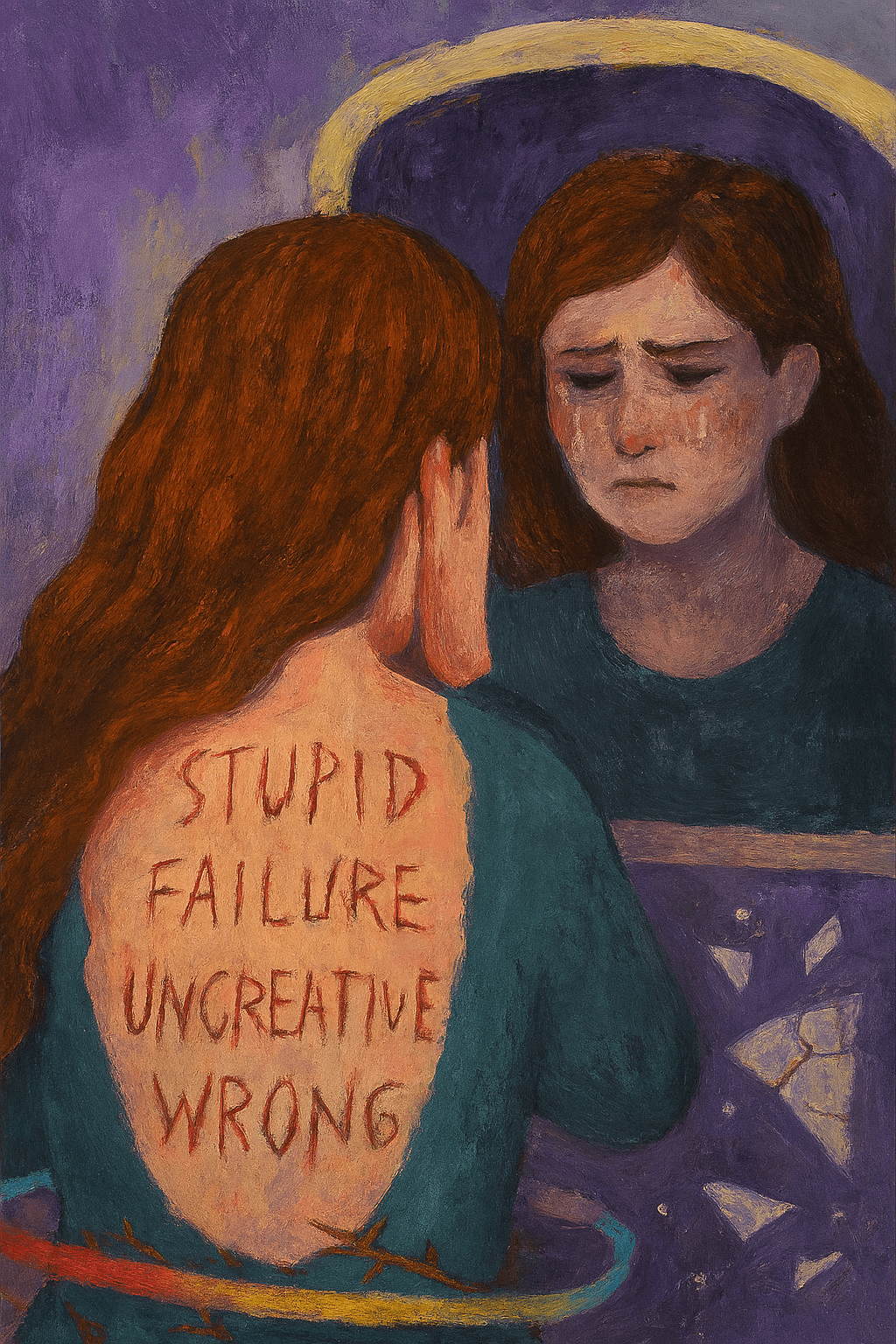
The Beast in the Brain: Meet Your Inner Critic
There is a psychological nuisance so powerful it could flatten a soufflé at twenty paces — and it stalks almost every writer alive.
It’s that sneering voice in your head whispering:
“Who do you think you are, some secret J. K. Rowling?”
or
“Stop pretending you have a literary bone in your body.”
Sound familiar? Congratulations: you’ve met your Inner Critic.
It’s not clever. Neither is it prophetic. It’s just loud. And if left unchecked, it will have you doubting your talent, your ambition, and your right to stand among “real” writers.
Here’s the truth: that voice isn’t the guardian of quality — it’s the ghost of every detractor you’ve ever (actually or imaginatively) encountered.
It doesn’t speak for your creativity. It speaks for fear. And fear is a terrible editor.
Why Your Brain Sometimes Betrays You
Even the greats got ambushed by self-doubt. Katherine Mansfield once confessed:
“Each time I make a move my demon says at almost the same moment: ‘Oh yes, we’ve heard that before.’”
Same, Katherine. Same.
Doubt is often just your brain trying (badly) to keep you safe. It’s afraid of rejection, ridicule, and unpaid electricity bills. Neurologically, fear activates your amygdala (your brain’s panic button) and dampens activity in your prefrontal cortex — the part you actually need for creativity.
So while your brain sulks in the corner wearing the “sensible adult” hat, your creativity is quietly pacing, sharpening its claws, and waiting for you to open the door.
Here’s how to do exactly that.
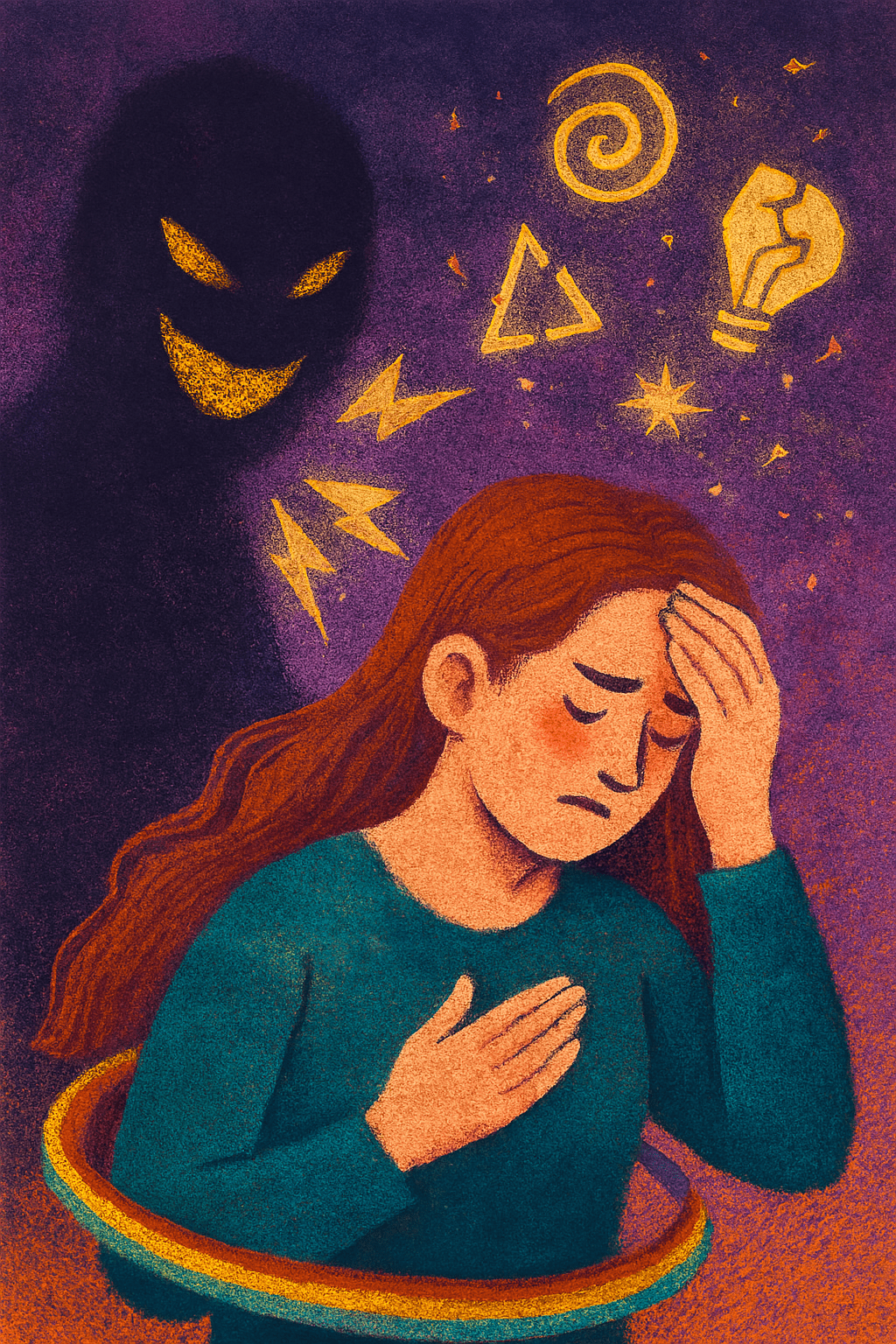

Step 1: Decapitate Doubt (Gently)
Decide you’re a writer. No lightning strike required, no diploma, no secret handshake. Just the decision.
Then write. Every day if you can, or as often as you dare. Treat your thoughts like noisy birds — acknowledge their squawking, then shoo them off your shoulder.
Cognitive behavioural therapists call this cognitive defusion: the art of noticing thoughts without obeying them. The more you practice it, the less power your critic has.
As Richard Carlson put it:
“Anytime you can be aware of and witness your own thoughts… you’re in a position to grow from your experience rather than being immobilized by it.”
Writing regularly rewires your brain from “I might be a fraud” to “Oh hey, I actually do this now.” Repetition is your sword. Habit is your armour. And action is the one thing the critic can’t argue with.
Step 2: Seek Small Wins (They Count)
Waiting to be “good enough” before publishing is like waiting to be fit before you go to the gym. Utter nonsense.
Instead, set the bar deliciously low. Submit your work anywhere. A niche blog. A micro-zine. That friendly-looking literary journal that only four people read (two of whom are cats).
Each small win builds evidence your brain can’t deny. In psychology this is called self-efficacy: belief in your ability based on proof from past experience. Each published piece becomes physical proof that yes — you are a writer.
Even better, it slowly silences the voice that says otherwise. Real-world wins are kryptonite to imaginary critics. You don’t need to impress the whole internet. You just need one tiny triumph — and then another.
Step 3: Remember Why You Started
Before doubt crept in wearing sensible shoes, something called you to write. Maybe it was the thrill of shaping worlds from words. Maybe it was that one luminous sentence you once wrote that still makes your heart do a drum solo.
Reignite that spark. Revisit old notebooks. Reread the books that made you want to write in the first place. Put reminders of your “why” everywhere — post-its, mood boards, the lock screen on your phone.
Because when you write from love, the critic looks less like an almighty judge and more like what it really is: a grumpy raccoon rattling the bin lids outside your window. Loud, but powerless.
Purpose cuts through fear like sunlight through cobwebs.
Step 4: Learn from the Wobbly-Kneed Legends
Every literary giant started as a quivering unknown. Many had day jobs, bad grades, and entire families convinced they were wasting their time.
J.K. Rowling was rejected by twelve publishers. Stephen King chucked Carrie in the bin before his wife fished it back out. Maya Angelou admitted that every time she wrote another book, she feared people would finally discover she was “a fraud.”
Read their biographies. Watch their interviews. Soak up the mess behind the myth. Knowing others have battled the same inner fiend makes yours feel… frankly, a bit melodramatic.
Let their resilience sneak into your bloodstream. Borrow their audacity until your own kicks in.
Step 5: Write Anyway
This is the big one. The only cure for fear of writing is writing. Dare to write badly. Write brilliantly. Go ahead give yourself permission to write nonsense about a tap-dancing hedgehog if that’s what it takes to keep the gears moving.
Science backs this up: regular creative practice reduces activity in your brain’s fear centres over time. (Translation: your critic gets bored and goes off to haunt someone else.)
Aristotle nailed it millennia ago:
“We are what we repeatedly do. Excellence, then, is not an act, but a habit.”
The more you write, the more you prove your critic wrong — not with arguments, but with action. That’s how masterpieces are made: not in a flash of genius, but in a thousand messy drafts.
Closing: Show Up, Pen First
Self-doubt may never disappear completely, but it can be tamed. Like any beast, it responds to consistent training — and a firm hand on the keyboard.
So when that inner voice snarls “Who do you think you are?”, answer calmly:
“A writer. Obviously.”
Then go write something wonderful.
Until next time, may your adventures be wild and your mysteries ever so slightly less terrifying.